Interior Drain Tile and Sump Systems for Cleveland Basements
Interior drain tile is the workhorse of basement waterproofing in Cleveland. It does not try to stop water at the wall. It gives the water a path to a pit before it can push up through the floor or seep out at the base of the wall.
An interior drain tile system is a perforated pipe laid in stone beside the footing, under the edge of the floor, that carries water to a sump pump. Fixr (2026) puts the drain at $40–$120 per linear foot and a sump pump at $600–$2,500. Cleveland inspects drain tile work under a city permit.
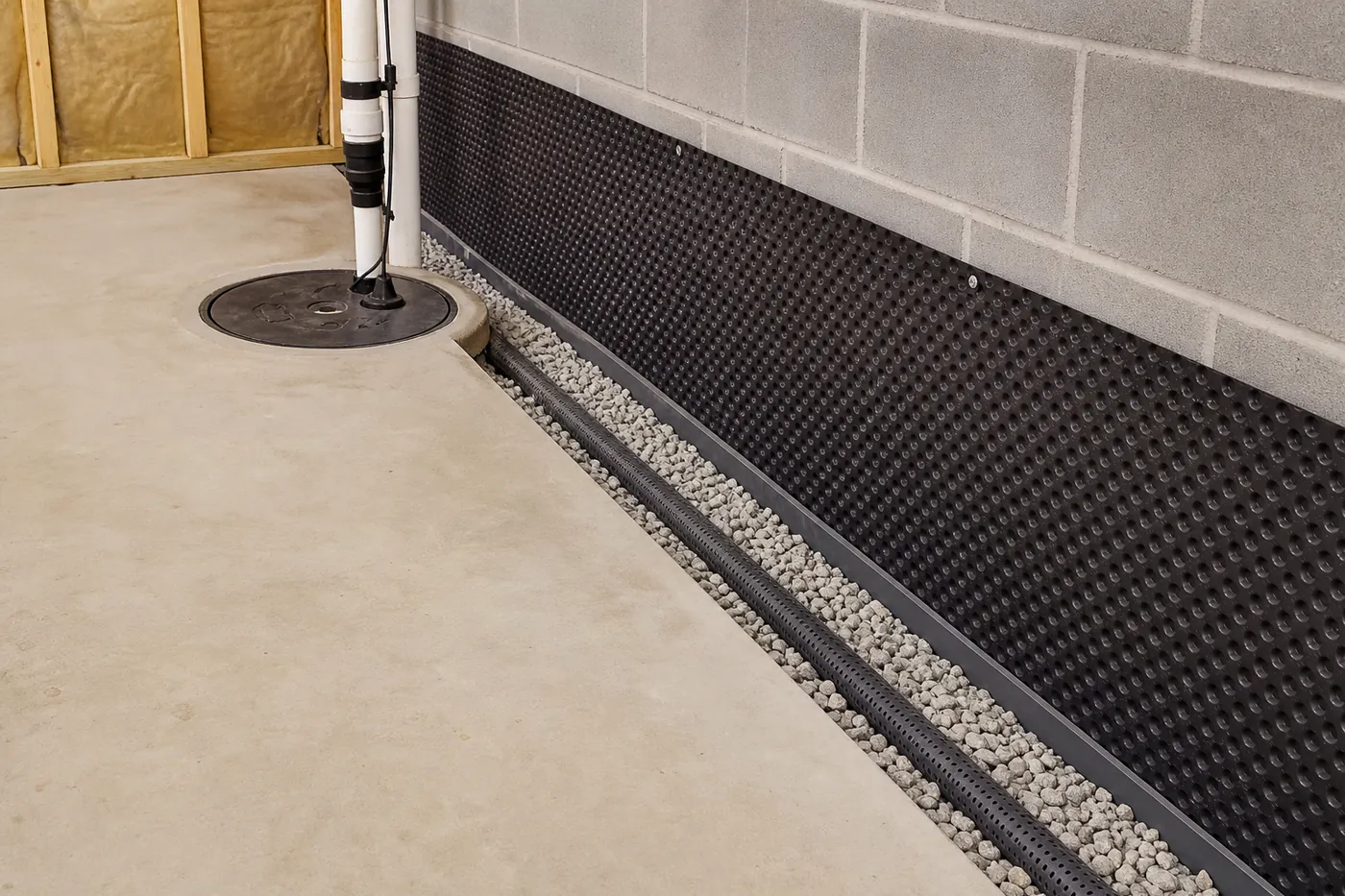
How does an interior drain tile system work?
The crew cuts out a strip of floor along the walls, digs down beside the footing, and lays perforated pipe in washed stone. A dimpled plastic sheet often goes up the lower wall so seepage runs down behind it into the trench. In block walls, small holes drilled into the bottom course let water trapped in the hollow cores drain out. The pipe slopes to a lidded pit, the pump lifts the water outside, and new concrete closes the floor. Water still reaches the wall; it just no longer builds pressure under the slab.
Why interior drain tile suits Cleveland's older basements
Hydrostatic pressure is the force of water standing in the soil against a wall and under a floor. Around much of Cleveland that water stands high for months: the official description of Mahoning soil, the county's most extensive named soil, puts the seasonal water table 6 to 12 inches below the surface from October through June, and Ellsworth, its better-drained neighbor, 11 to 24 inches from November to May (USDA NRCS). A basement 7 feet deep sits well below either.
Many older houses were built without much drainage, or with footer drains that have long since silted up. The Residential Code of Ohio recognizes the interior route: an existing foundation with a supplemental interior drainage system connected to a sump pump does not need exterior dampproofing or waterproofing (Ohio Adm. Code 4101:8-4-01, sections 406.1 and 406.2).
The pump decides whether the system works
- Capacity. A pump sized for a dry year will struggle in a year like 2011, when Cleveland collected a record 65.32 inches (NWS Cleveland). Ask how the size was chosen.
- Check valve and discharge. The discharge line needs a check valve and must end far enough from the house that the water does not circle back into the trench.
- Power loss. A battery backup or a second pump keeps the pit from overflowing when the power fails during a storm.
- A sealed lid. A lidded pit keeps out debris and moist basement air.
Permits and inspections in Cleveland
Cleveland's Department of Building and Housing requires permits for repairs and alterations, issues them only to contractors registered with the city in their trade, and lists an inspection before waterproofing and drain tile are backfilled. New piping for the discharge counts as drainage work, which the city excludes from minor repairs. Ask who pulls the permit, then compare the pieces of each bid in the Cleveland basement waterproofing cost guide.
Questions homeowners ask
Will interior drain tile stop water coming up the floor drain?
No. Drain tile handles groundwater around and under the basement. Water or sewage rising through a floor drain is coming back from the sewer, often during a heavy storm on Cleveland's older combined sewers, and needs a plumber and a check by the city's Water Pollution Control division. Many basements have both problems, which is why the cause comes first.
How loud is a sump pump in a finished basement?
Most people hear a short hum and the thump of the check valve closing when it shuts off. A sealed lid and a quiet check valve cut the noise, and placing the pit in a storage room or under a stair helps. Ask to see where the pit will go before the floor is cut, since moving it later is costly.
Sources
- USDA NRCS Official Series Description: Mahoning series
- USDA NRCS Official Series Description: Ellsworth series
- Ohio Administrative Code 4101:8-4-01: Residential Code of Ohio, Foundations
- City of Cleveland Department of Building and Housing: Permit Inspections
- National Weather Service Cleveland: 2011 record precipitation
Where is the water showing up?
A sentence is enough: a puddle along the back wall every spring, a white crust on the block, a crack that runs sideways halfway up. One independent basement specialist who works in Cleveland will get in touch to talk it through.